Slurry walls
Slurry wall construction for groundwater control and containment
Slurry walls are subsurface barriers used to control groundwater movement, contain contaminants, support environmental remediation and geotechnical construction. ENTACT has installed more than 7.5 million square feet of slurry walls across more than 60 projects. Our self-perform approach combines company-owned equipment with experienced operators, project managers, and technical professionals to support safe, efficient slurry wall installation.
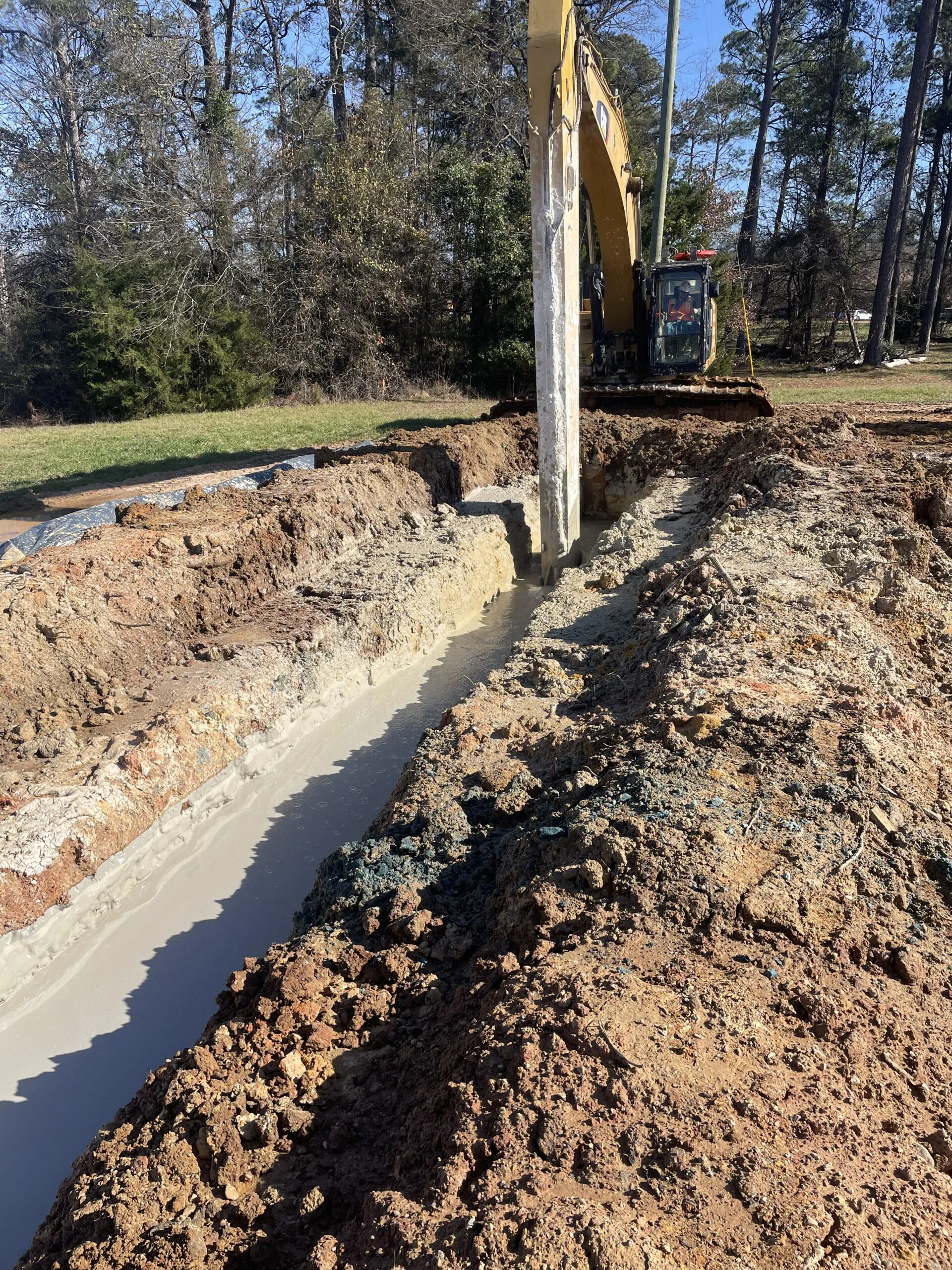
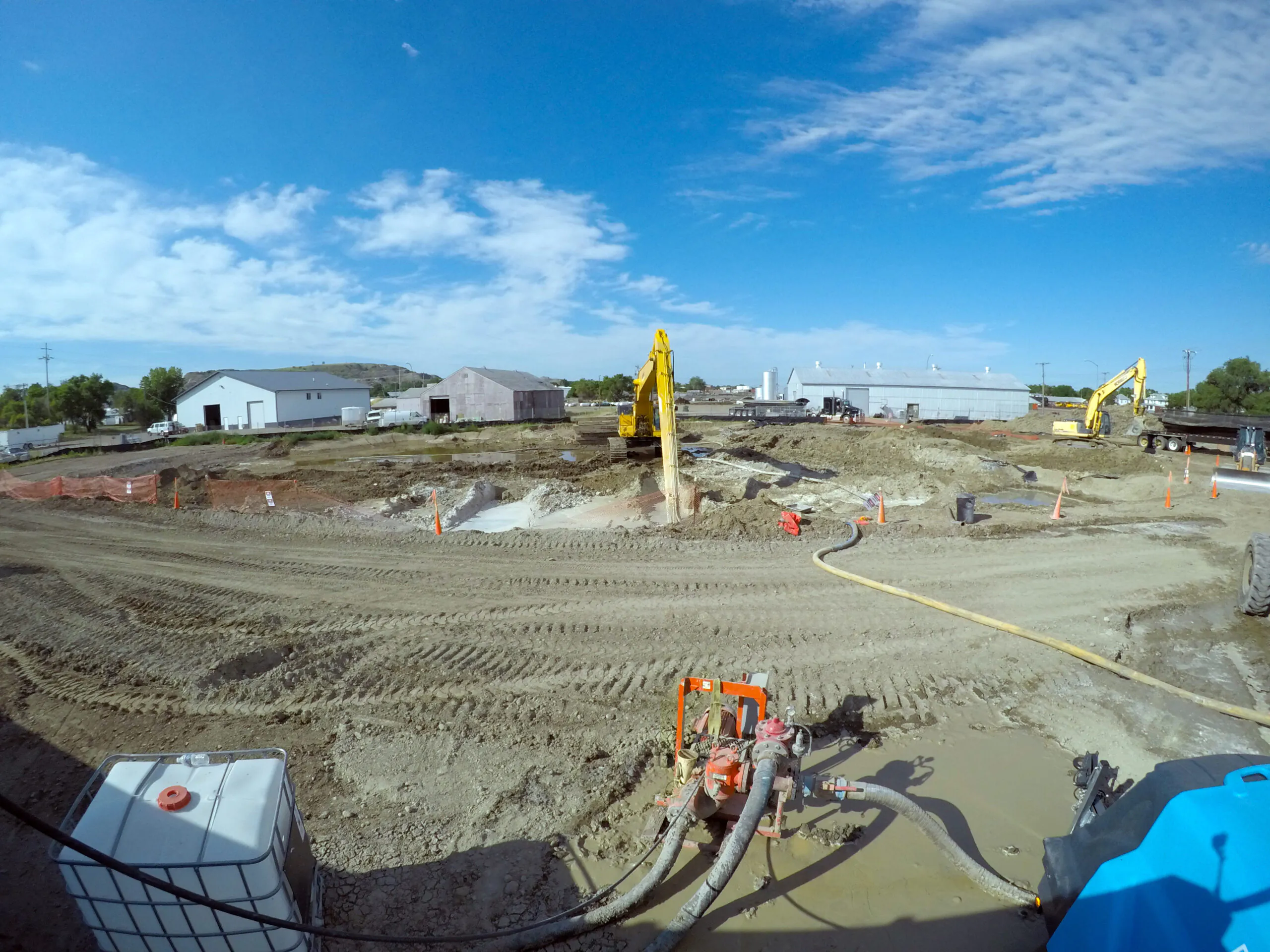
Slurry cutoff wall construction
Slurry wall construction is an excavation method, generally deep and narrow, where a viscous fluid (slurry) is pumped into the excavation while the excavation is advanced. This slurry stabilizes the trench side walls and prevents trench collapse. Once the required depth of the trench is reached, engineered backfill is placed into the trench to form a continuous subsurface barrier or in certain cases, the slurry itself can consist of a self-hardening slurry.
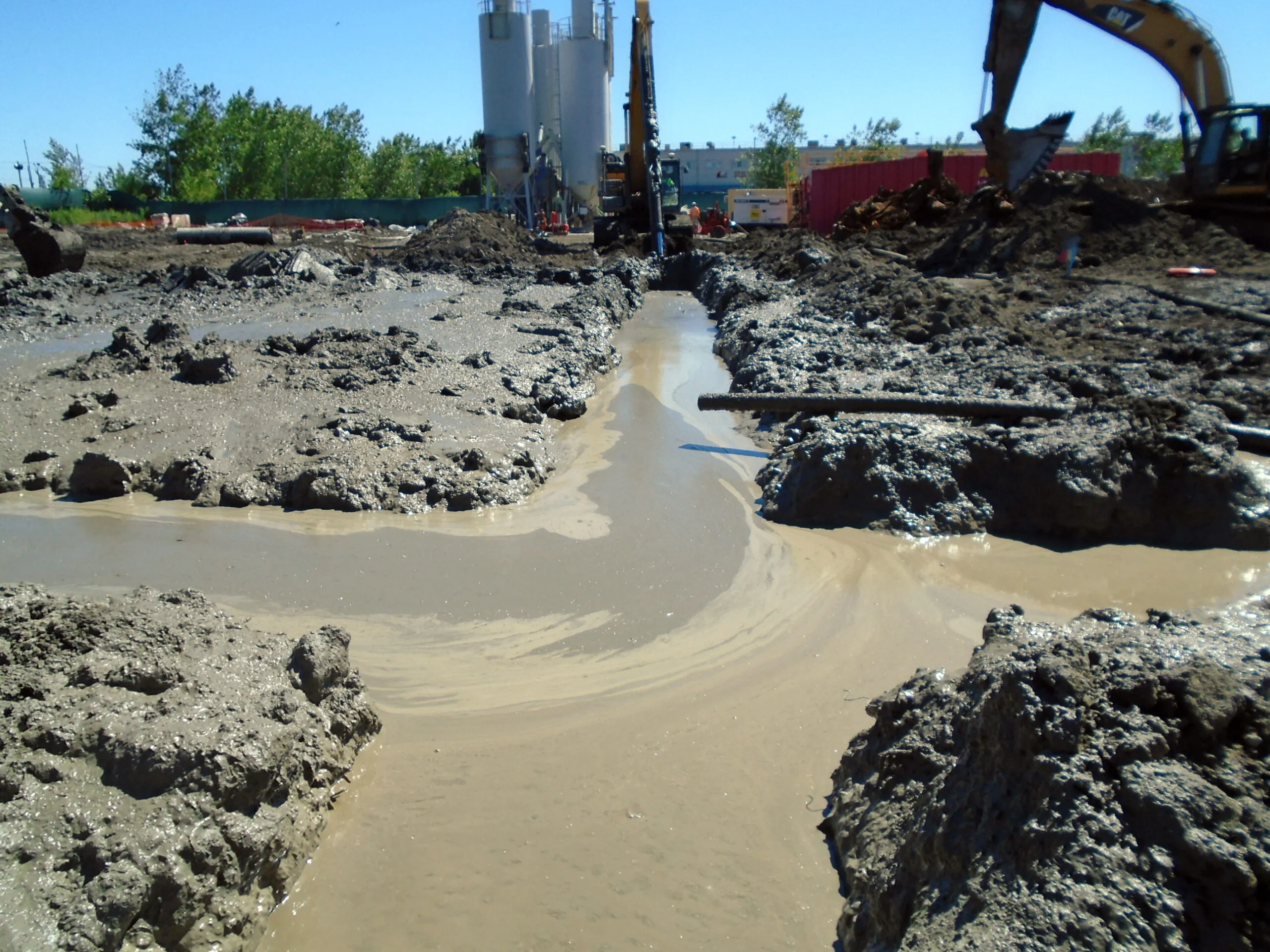
ENTACT mixes slurry in tanks or ponds near the excavation and pumps it into the trench as excavation progresses. Depending on project requirements and subsurface conditions, slurry and backfill materials may include native or imported soil, bentonite, cement, slag, and biopolymers. Engineered backfill is generally mixed adjacent to the trench and placed with a dozer that follows the excavator, creating a continuous impermeable barrier. ENTACT’s slurry wall capabilities include:
-
- Soil-bentonite, cement-bentonite, cement-slag-bentonite, soil-cement-bentonite, composite slurry cutoff wall installations
- Biopolymer slurry trenches for groundwater extraction
- Site dewatering
- Funnel and gate and permeable reactive barrier (PRB) groundwater treatment systems
These systems can be used for contaminant containment, groundwater control and treatment, earth retention, deep excavation/removal, structural support, ground stabilization, settlement mitigation, and liquefaction mitigation.
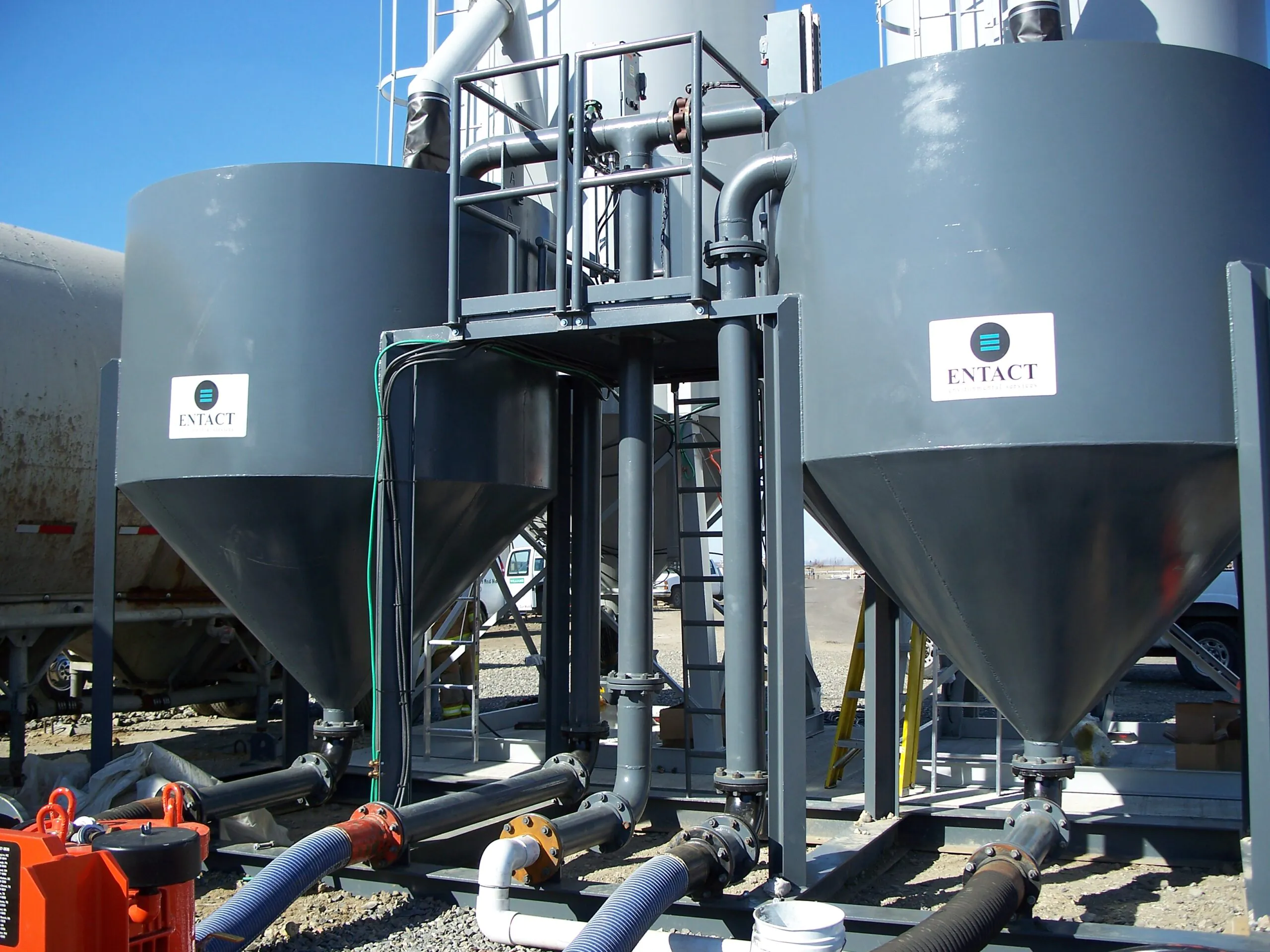
Self-performed slurry wall installation
ENTACT self-performs slurry wall construction using company-owned long-reach excavators, extended sticks and booms, slurry mixing tanks, pumps, and silos. This equipment allows our field teams to configure excavation and material handling operations around project-specific depth, access, production, and site conditions.
Experienced operators work alongside project management and technical professionals to manage slurry production, trench excavation, backfill placement, and other construction activities. This field experience is particularly important when subsurface conditions, site access, utilities, groundwater, or other constraints affect the construction approach.
ENTACT’s experience includes slurry wall projects for environmental remediation and geotechnical construction applications across the country.
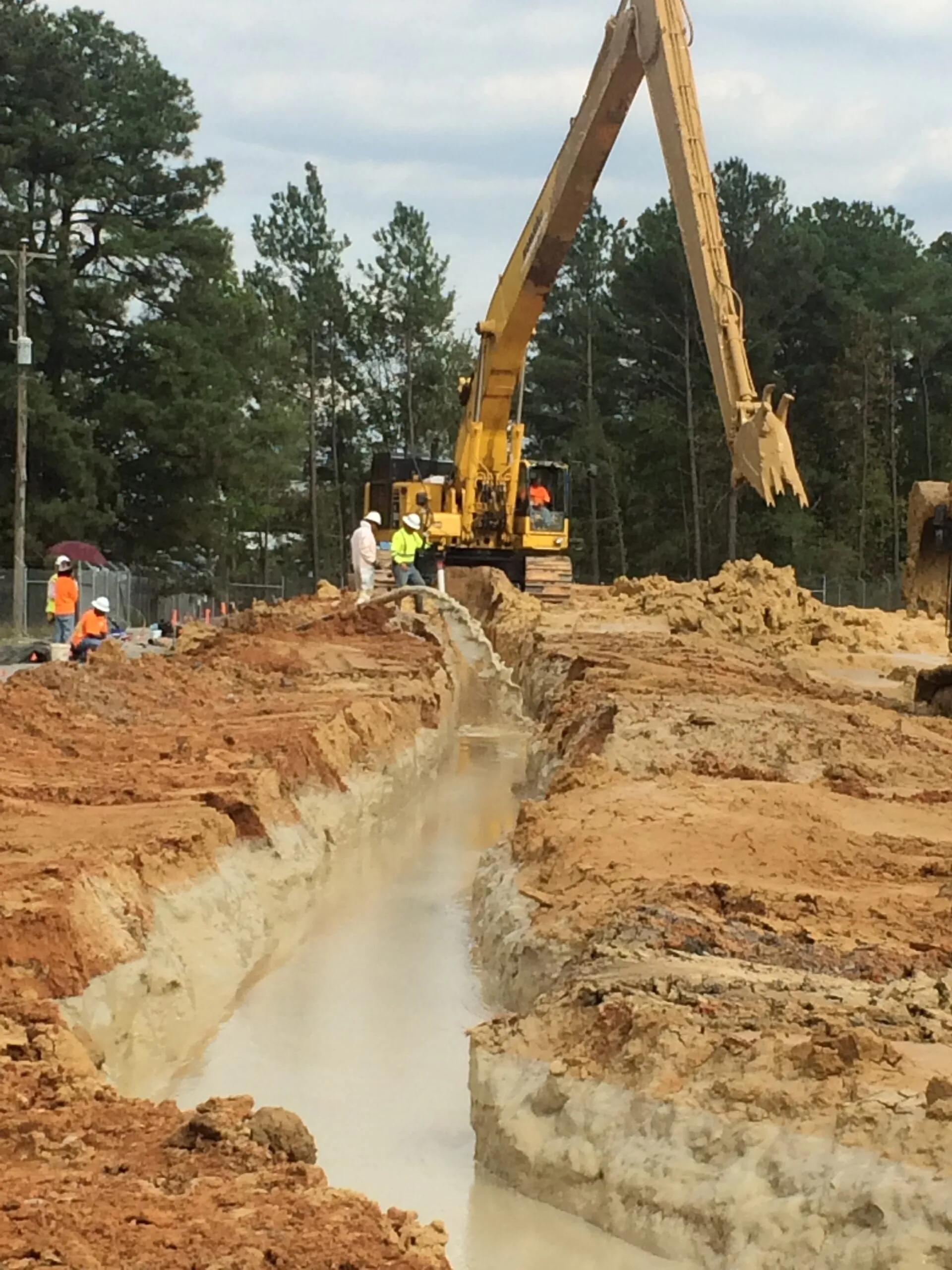
Slurry wall design-build support
ENTACT provides design-build and constructability support for slurry walls and other barrier wall systems used in environmental remediation and geotechnical construction. Our technical teams evaluate subsurface conditions, slurry and groundwater compatibility, excavation stability, engineered fill requirements, and construction constraints to support practical wall solutions.
Detailed geotechnical investigation information can help establish soil conditions, design depth, groundwater conditions, and other factors that influence slurry wall construction. Useful information may include boring logs, soil descriptions, strength values, laboratory data, groundwater information, photographs, bench-scale mix testing, and existing design drawings and specifications. Historical pipe crossings, utilities, access routes, and other site constraints are also important to the construction approach. ENTACT’s slurry wall design-build support may include:
- Slurry and groundwater compatibility testing
- Engineered fill and groundwater compatibility testing
- Platform stability evaluation
- Geologic identification and design depth determination
- Trench stability evaluation
- Earth pressure and surcharge considerations
- Groundwater surcharge evaluation
- Specifications, drawings, and plan development
- Mix Design Evaluation
- Unconfined compressive strength (UCS) testing
- Atterberg limits
- Hydraulic Conductivity (permeability)
- Unit weight
- Viscosity
- pH
Slurry wall quality control
ENTACT develops project-specific work plans and quality control procedures for slurry wall construction. The quality control program is designed around the requirements of the project specifications, slurry formulation, subsurface conditions, and performance requirements of the completed wall. Quality control activities may include:
- Work pad preparation and verification
- Slurry pond or batch plant setup and operation
- Fresh slurry testing
- In-trench slurry testing
- Slurry backfill testing, including third-party laboratory testing
- Slurry wall cap testing, where required
Slurry properties such as density, viscosity, and pH are monitored during construction, along with other project-specific parameters. Testing and documentation help verify that slurry and backfill materials meet established requirements throughout installation.
Excavation safety and site conditions
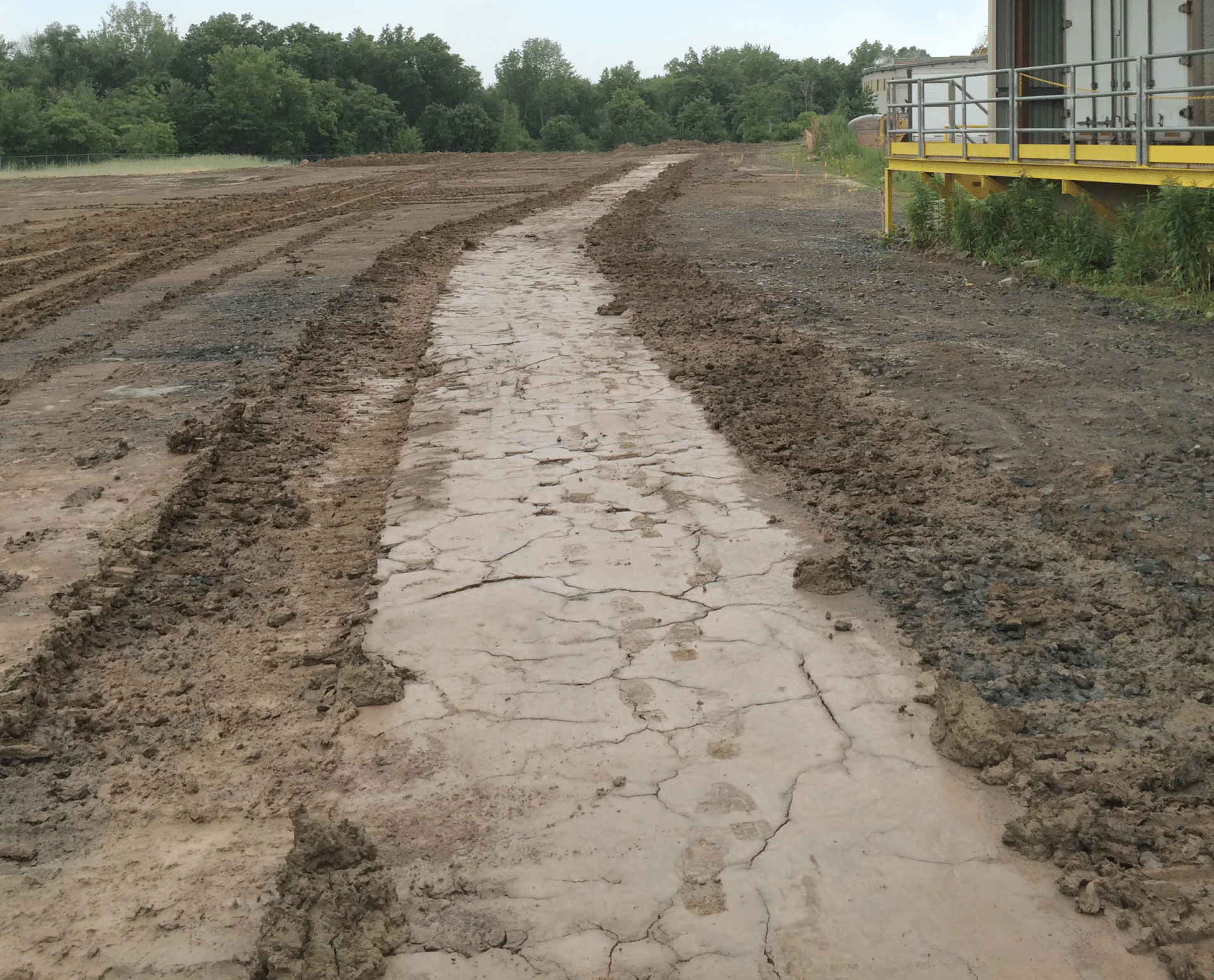
Slurry-supported excavation can be performed in a wide range of weather conditions. Below-freezing temperatures require additional measures to prevent slurry and equipment from freezing. Slurry may need to be continuously recirculated during cold weather, while pumps and other equipment may require winterization during overnight or weekend shutdowns. Heavy precipitation can affect production when site roads or work areas become unsafe. Because slurry wall construction is already a wet process, normal precipitation does not necessarily require operations to stop.
ENTACT evaluates excavation conditions throughout construction and uses appropriate sloping or shoring systems where required. The ENTACT Competent Person verifies that excavations meet applicable OSHA requirements before entry. Excavations are also evaluated for confined space hazards, and water seepage is controlled to maintain safe excavation conditions.
Frequently asked questions
A slurry wall is a continuous underground barrier constructed by excavating a deep, narrow trench where a viscous fluid (slurry) is pumped into the excavation while the excavation is advanced. This slurry stabilizes the trench side walls and prevents trench collapse. The trench is then backfilled with an engineered backfill and the slurry is displaced. Slurry walls are commonly used to control groundwater movement, contain contaminated materials, and create subsurface barriers for environmental and geotechnical applications.
During slurry wall construction, a trench is excavated and filled with a viscous fluid (slurry). The slurry exerts hydraulic pressure against the trench walls resisting the lateral earth pressures of the trench side walls prevent the excavation from collapsing. Once the required depth is reached, engineered backfill is placed into the trench to create a continuous cutoff barrier.
Slurry wall materials vary based on project objectives and subsurface conditions. Common materials include native or imported soil, bentonite, cement, slag, and biopolymers.
Slurry walls can be used for groundwater control, contaminant containment, groundwater treatment, earth retention, deep excavation, structural support, ground stabilization, settlement mitigation, and liquefaction mitigation. The appropriate wall system depends on the site's subsurface conditions and project objectives.
Slurry wall depth depends on subsurface conditions, project requirements, available equipment, access, and trench stability. ENTACT uses long-reach excavators and extended sticks and booms to support slurry wall installation at significant depths.
Yes. Slurry walls can be performed in below-freezing conditions with appropriate controls. Slurry may need to be recirculated to prevent freezing, and pumps and other equipment may require winterization during periods when operations are not continuous.
Geotechnical investigation data, boring logs, soil descriptions, laboratory testing, groundwater information, and design drawings can help establish the requirements for slurry wall construction. Information about utilities, historical pipe crossings, access routes, work areas, and site constraints is also valuable when developing a construction approach.
Both systems can create subsurface barriers, but they are constructed differently. A slurry wall is excavated under slurry and then filled with an engineered backfill. A sheet pile wall is constructed by driving, pressing or vibrating interlocking sheet piles into the ground. The appropriate system depends on factors such as wall function, subsurface conditions, groundwater, site access, depth, and project requirements.
A biopolymer slurry trench uses a biodegradable biopolymer slurry to temporarily stabilize an excavation. These systems can be used for groundwater extraction, site dewatering, Permeable reactive barriers or treatment injection applications where a permanent cutoff wall is not required.
Let’s work together
We want to hear about your project. Learn how we deliver results with innovation.