Shoreline and bank stabilization
Protecting shorelines from erosion
Shorelines and banks are constantly exposed to erosion from wave action, changing water levels, storms, and flowing water. Over time, these forces can damage infrastructure, destabilize slopes, and impact surrounding habitats. Stabilization measures help protect shorelines, reduce erosion, and improve long-term site performance.
ENTACT provides shoreline and bank stabilization services for industrial facilities, ports, waterways, redevelopment sites, and other environments where erosion threatens infrastructure or future site use. Our solutions are designed to address site-specific conditions while supporting long-term stability and resilience.
Shoreline and bank stabilization methods
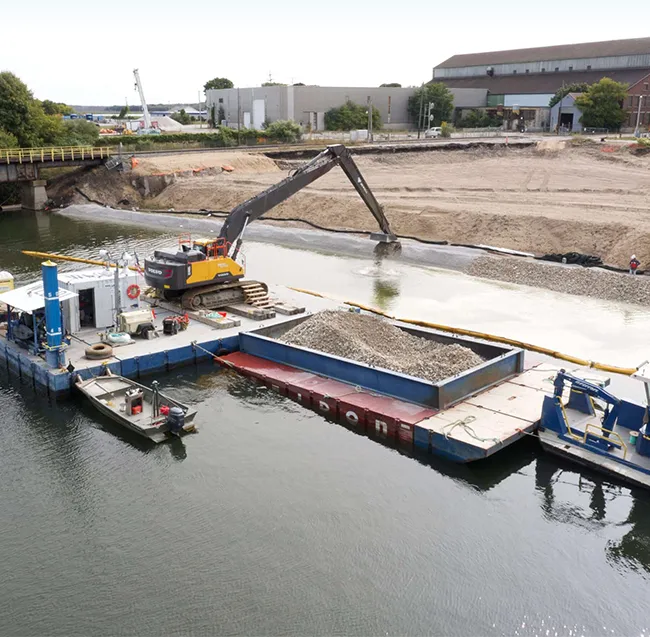
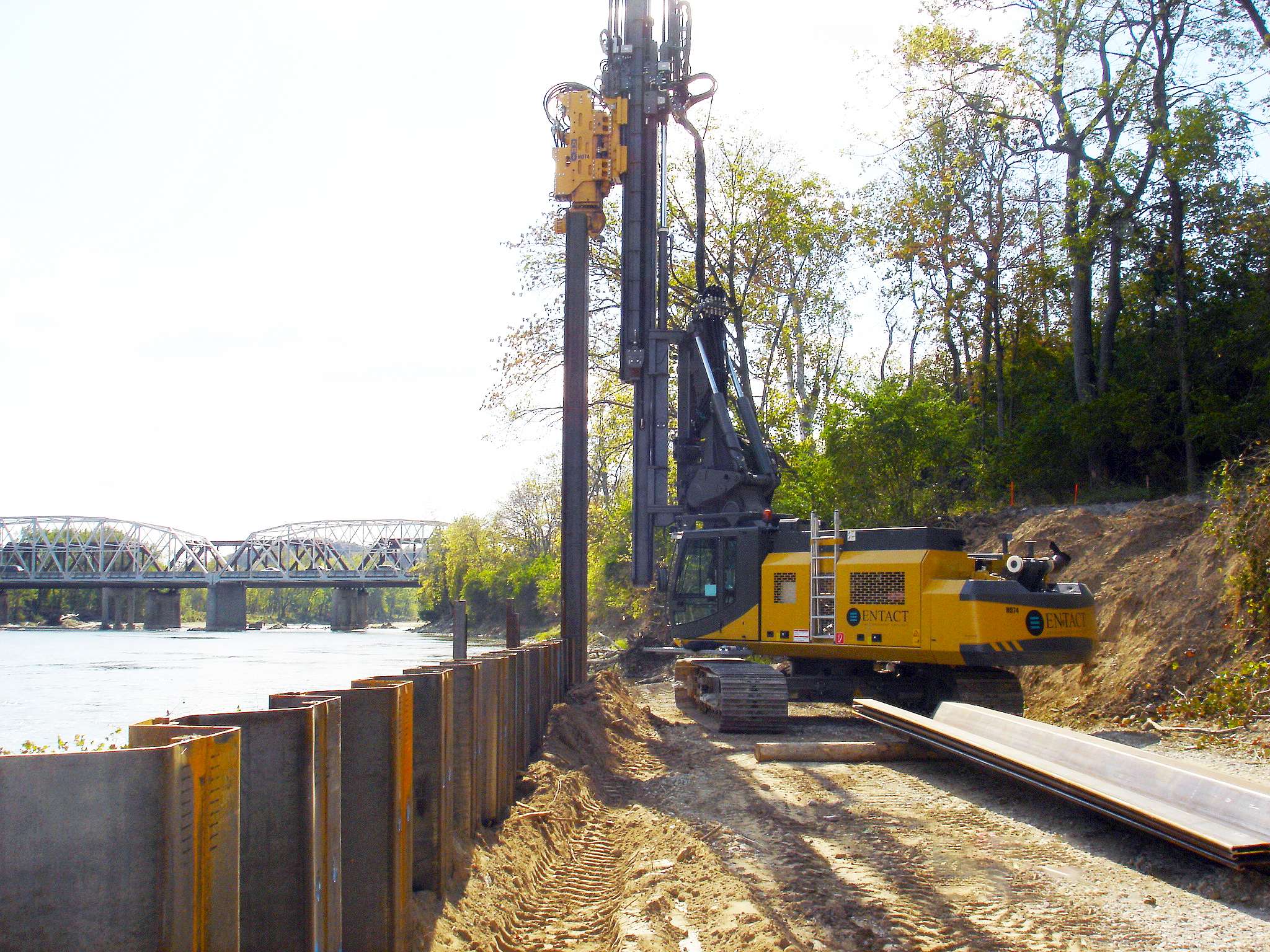
No two shorelines are the same. Soil and sediment conditions, water movement, existing infrastructure, and project objectives all influence the best stabilization approach. Many projects use multiple techniques to achieve the desired level of protection. Depending on the site, shoreline stabilization may include:
- Retaining walls
- Seawalls
- Sheet pile installation
- Cutoff walls
- Riprap installation
- Erosion control systems
- Ground improvement
- Habitat restoration and revegetation support
These methods can be used individually or combined to help protect shorelines from erosion while improving long-term stability.
Ground improvement for shoreline stability
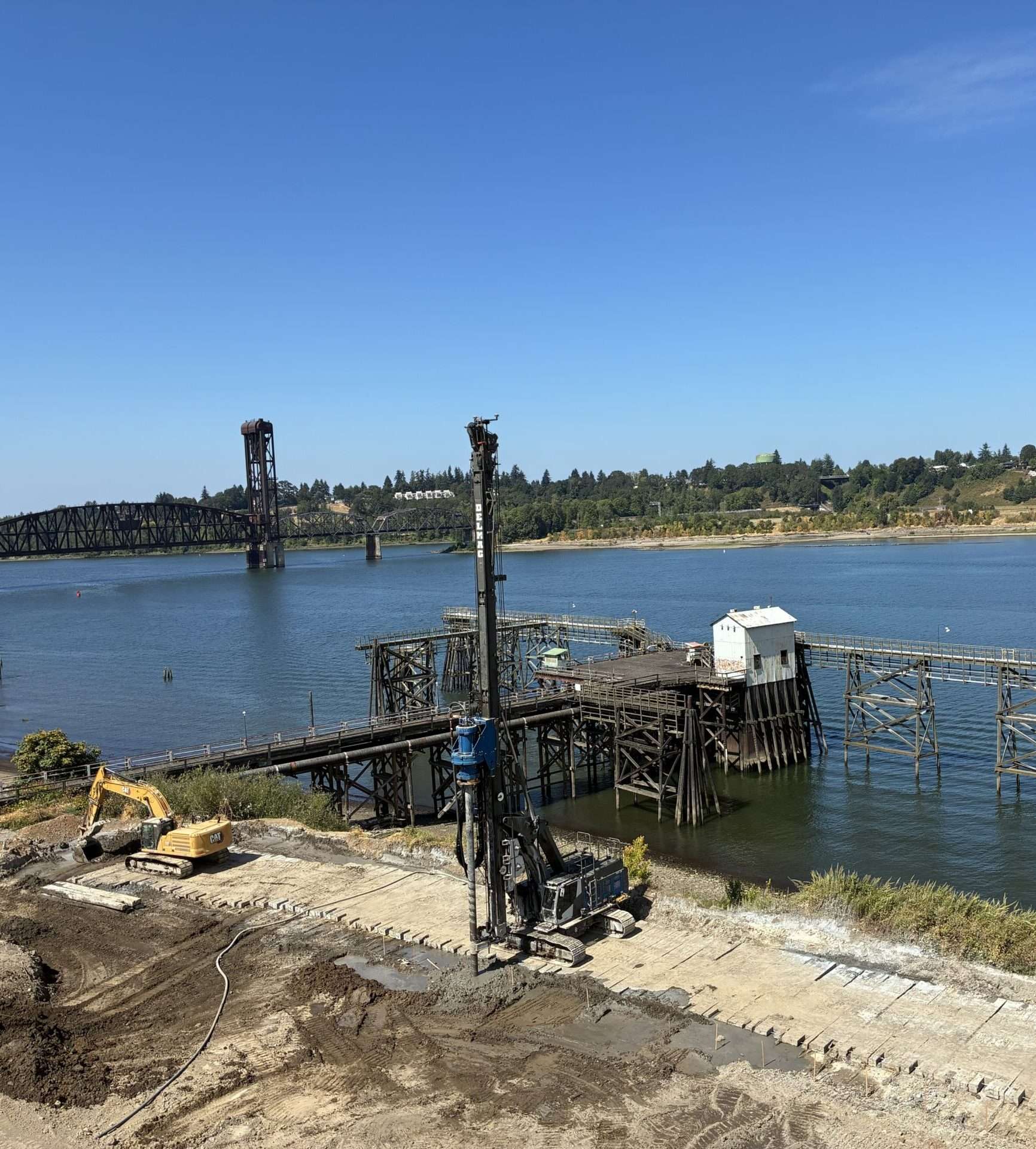
Many shorelines support critical infrastructure such as ports, industrial facilities, storage terminals, and transportation corridors. In these areas, stable subsurface soils are just as important as protecting the shoreline itself.
Weak soils can contribute to settlement, slope instability, and structural damage. Ground improvement strengthens these soils and creates a more stable foundation for existing and future infrastructure.
ENTACT improves shoreline soils using deep soil mixing (DSM) and other ground improvement techniques. Depending on project requirements, engineered binders such as cement-slag blends, quick lime, fly ash, and fluidized bed ash can be incorporated to improve soil strength and performance. Ground improvement can help:
- Increase soil strength
- Improve load-bearing capacity
- Reduce settlement
- Improve resistance to wave action and storm surges
- Reduce liquefaction potential in seismic areas
- Extend the service life of waterfront infrastructure
Supporting environmental restoration
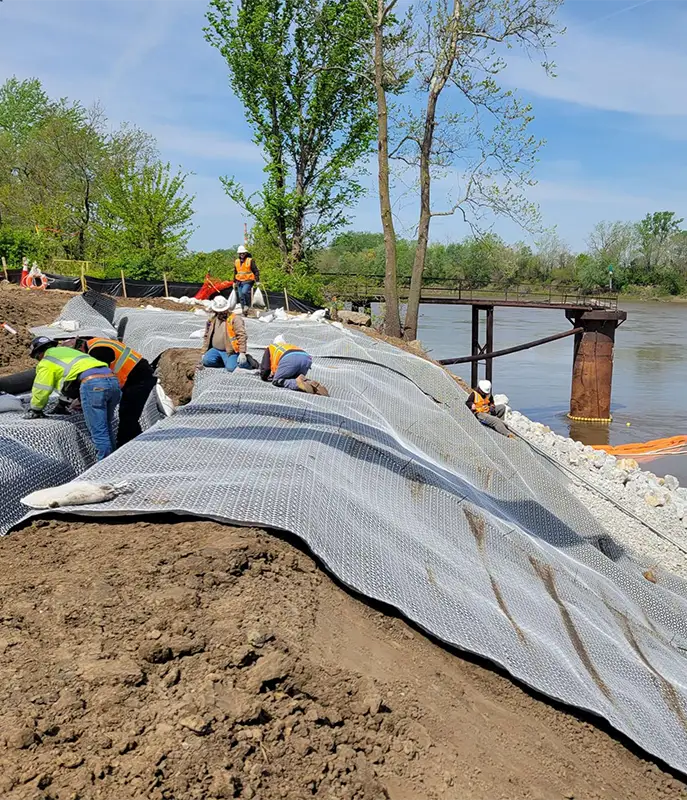
Shoreline stabilization projects often include environmental restoration as part of the overall solution. Revegetation and habitat restoration can help stabilize soils, improve ecological function, and support long-term shoreline resilience. ENTACT works with ecological restoration specialists to integrate these improvements into shoreline stabilization projects when appropriate.
Key considerations for shoreline stabilization
Because every shoreline has different challenges, electing the right stabilization approach begins with understanding the site’s unique conditions and project goals. In many cases, multiple stabilization methods are combined to achieve long-term performance. Key factors that influence the stabilization approach include:
- Soil and subsurface conditions
- Wave action, water flows, and water level fluctuations
- Slope stability
- Existing infrastructure and utilities
- Environmental permitting requirements
- Long-term maintenance needs
- Future site use and loading requirements
A successful shoreline stabilization solution protects against erosion while supporting long-term site performance. It should also balance constructability, environmental considerations, and lifecycle costs.
Frequently asked questions
Shoreline and bank stabilization is the process of reducing erosion and strengthening shorelines, riverbanks, lakeshores, and coastal areas. Stabilization methods help protect infrastructure, improve slope stability, and maintain long-term shoreline performance.
Erosion can be caused by wave action, changing water levels, storms, currents, wind, flowing water, and poor soil conditions. Human activity and changing land use can also accelerate erosion.
Common stabilization methods include seawalls, retaining walls, sheet pile walls, riprap, erosion control systems, cutoff walls, and ground improvement techniques. The best solution depends on the site's conditions and project goals.
Deep soil mixing is used when existing soils do not provide enough strength to support shoreline structures or critical infrastructure. It improves soil strength, increases load-bearing capacity, reduces settlement, and can help reduce liquefaction potential in seismic regions.
Yes. Many projects include revegetation or habitat restoration alongside structural stabilization. These improvements can help reduce erosion while supporting ecological recovery and long-term shoreline health.
Shoreline stabilization is commonly used for industrial facilities, ports, terminals, refineries, power plants, transportation infrastructure, waterfront redevelopment projects, and municipal shoreline improvements.
Shoreline stabilization helps reduce erosion, protect infrastructure, improve slope stability, increase resilience to storms and changing water levels, reduce maintenance needs, and extend the life of waterfront assets.
Let’s work together
We want to hear about your project. Learn how we
deliver results with innovation.